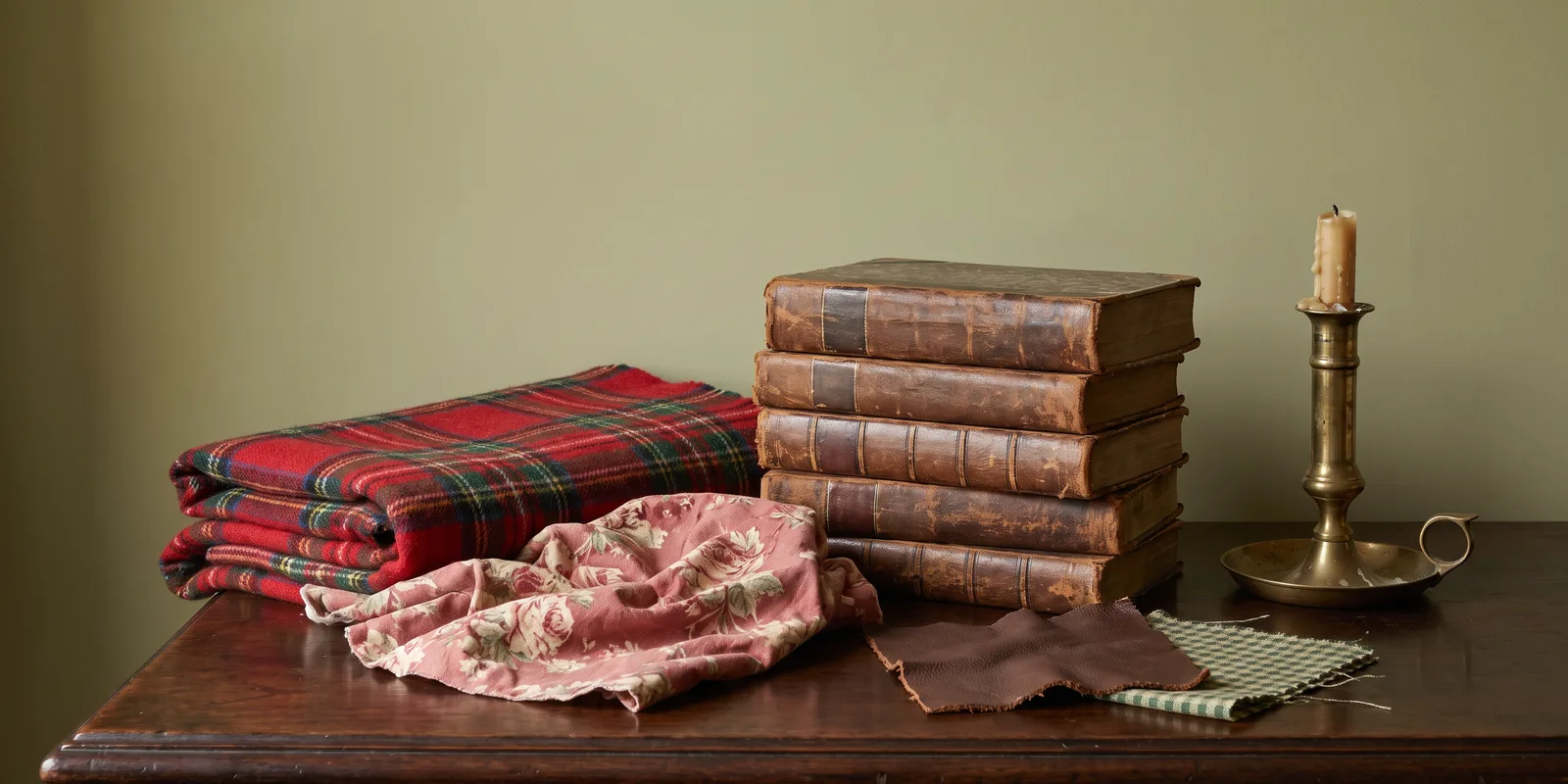
English style, that of British country houses, is one of the warmest: layers of fabric, dark woods, objects that seem always to have been there. This page traces its origins and explains which buyers it speaks to.
Origins and history
In the nineteenth century, the Arts and Crafts movement reacted against the cheap industrial furniture of the Victorian era by restoring the value of craftsmanship, plant patterns and honest materials.
In the twentieth century, British decorators fixed the image of the “English country house”: a mix of antique furniture, faded floral fabrics and comfort, meant to look lived-in rather than decorated.
Materials, colours and furniture
| Feature | What defines it |
|---|---|
| Materials | Waxed mahogany and walnut, turned legs, unlacquered brass, patinated leather, chintz, tartan, small checks, wool. |
| Colours | Racing green, oxblood, mustard, parchment cream, muted sage-green walls. |
| Typical furniture | Chocolate leather Chesterfield sofa, chintz wing armchair, mahogany butler’s tray table, glazed bookcase, embroidered footstool. |
| Accessories | Old books, prints, tartan throws, brass candlesticks; patina matters more than novelty. |
The big names of the style
William Morris. The British designer founded in 1861 the firm that became Morris & Co. in 1875; his wallpapers and fabrics with plant patterns helped launch the Arts and Crafts movement in Britain.
John Fowler and Nancy Lancaster. The British decorator joined Sibyl Colefax in the late 1930s in the firm Colefax and Fowler; with Nancy Lancaster, who bought the company in the 1940s, he fixed the English country-house style.
Public facts, checked against the sources listed at the end of the page. These designers have no connection with Khorama and do not endorse this software.
Which buyers is it for?
English is a warm, heritage style, but also a busy one: it suits homes with space and buyers who like lived-in interiors.
To see what the buyer receives, take the 360° tour of demo unit B204, produced in four other styles.
- Families in large flats or houses: the style shows a comfortable, lively interior.
- Long-term buyers and seniors: dark woods and books evoke durability.
- British or anglophile buyers, in the markets where they are present: they recognise themselves in it immediately.
- Less suited to small homes, which layered fabrics and furniture weigh down.