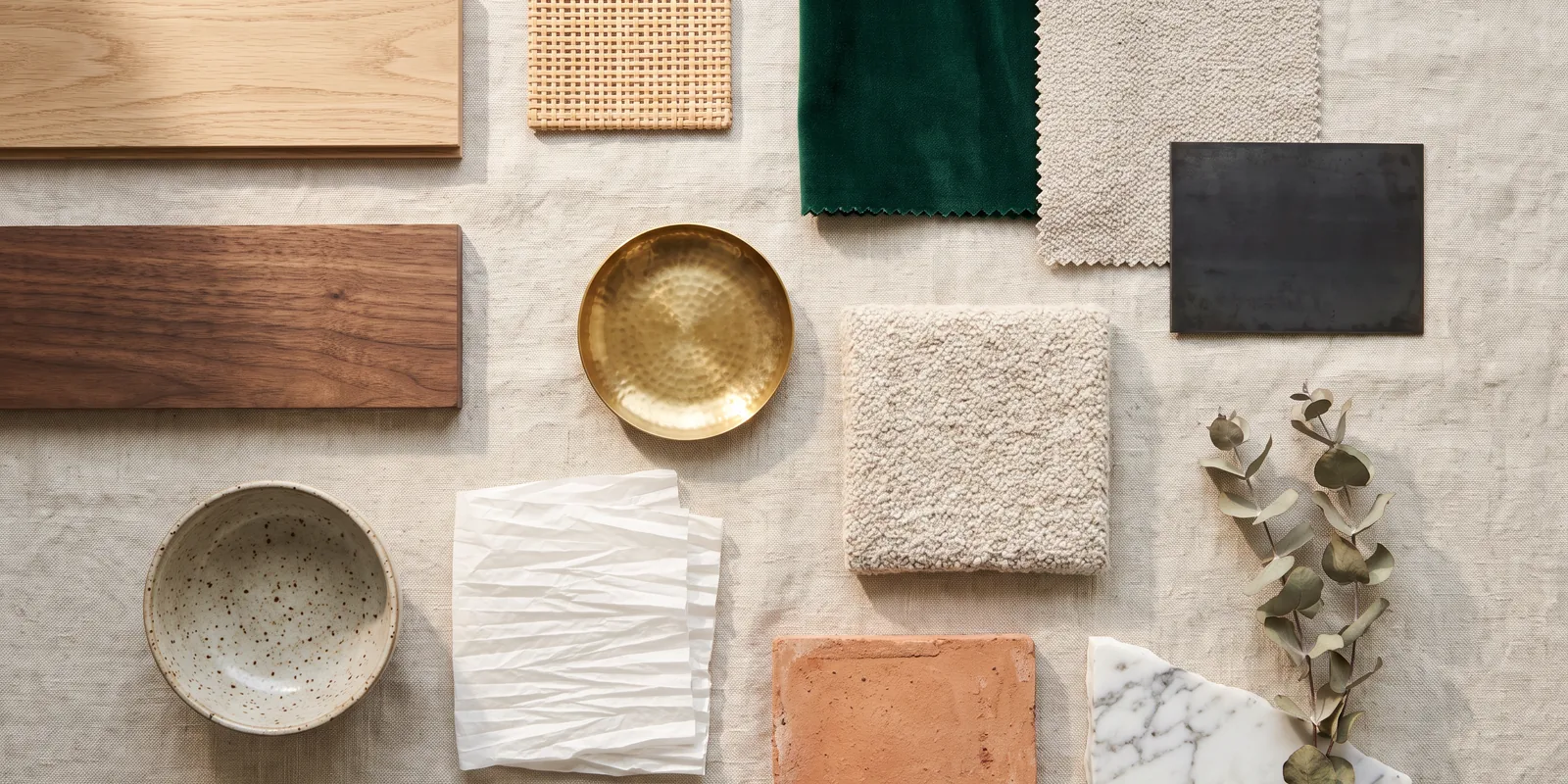
Japandi, Scandinavian, industrial, bohemian: style names are everywhere, but their outlines remain vague. Two “Scandinavian” interiors can have almost nothing in common. This article describes thirteen styles by what you can see: the shape of the furniture, the materials, the colours and the number of objects.
These thirteen styles are the ones Khorama offers to furnish a home’s 360° tour. The descriptions follow the software’s decorating guidelines; the historical references come from museums and encyclopaedias cited at the end of the article.
The thirteen styles in one table
Each style has its own detailed page in Khorama’s styles, for example japandi, Scandinavian or industrial.
| Style | Spirit | Materials | Colours |
|---|---|---|---|
| Scandinavian | Simple, welcoming, practical | Light wood, wool, linen; slim legs, gentle curves | Warm white, pale beige, soft grey, touches of sage |
| Japandi | Serene, sparse, low | Light oak and dark walnut, washed linen, washi paper, hand-thrown stoneware | Mushroom greige, sand, clay, charcoal accents |
| Minimalist | Calm and ordered, very few objects | Pale wood, plain fabric, matte metal | Warm white, soft grey, charcoal |
| Neutral | Warm and tidy, no pattern | Natural oak, washed linen, chunky knit, seagrass | Oatmeal, greige, linen, cream |
| Modern | Clean lines, softened corners, few objects | Pale oak, matte metal, plain woven fabric | Warm white, charcoal, sand |
| Industrial | Sturdy and understated | Dark metal, warm wood, durable fabric | Charcoal, brown, grey |
| Mediterranean | Relaxed and bright | Pale wood, woven fibre, natural linen | Cream, soft terracotta, olive |
| Bohemian | Lived-in, relaxed, uncluttered | Rattan, warm wood, soft linen; rounded shapes | Sand, rust, cream, olive |
| Oriental (Moroccan and Arabic) | Warm, hospitable, crafted | Carved cedar and walnut, mother-of-pearl, pierced brass, engraved copper, embroidered textiles | Saffron, indigo, emerald, terracotta on ivory and sand |
| Classic | Composed, symmetrical, without heavy ornament | Warm wood, plain linen, small touches of aged brass | Ivory, taupe, soft blue, Trianon grey |
| English | Country house, patinated and layered | Waxed mahogany and walnut, antique brass, worn leather, chintz, tartan | Racing green, oxblood, mustard, parchment cream |
| Elegant | Today’s Parisian luxury, polished and symmetrical | Velvet, polished brass, white veined marble, lacquer, pleated silk | Emerald, ink blue, burgundy on ivory |
| American | Generous, comfortable and tidy | Solid white oak, Shaker and Windsor lines, oil-rubbed bronze, linen, ticking stripes | Warm white, navy, oatmeal, denim blue |
Light and natural styles
Scandinavian. Scandinavian design became known beyond its countries of origin notably through the travelling exhibition “Design in Scandinavia”, shown in museums in the United States and Canada from 1954 to 1957. Stockholm’s Nationalmuseum notes that the concept remains contested. At home, it translates into light wood furniture with slim legs, wool and linen, warm whites and soft greys, and few accessories: an interior made for everyday life.
Japandi. A blend of “Japan” and “Scandi”, the term emerged in the mid-2010s according to the Danish Architecture Center, which notes its spread in the international interiors press from 2017. It borrows from Japan a taste for subdued, patinated beauty (what Japanese aesthetics calls wabi and sabi) and from Scandinavia light wood and comfort. Furniture is low, close to the floor, with horizontal lines; light oak is always paired with a dark wood (walnut or smoked oak). One object per surface, plenty of clear floor.
Minimalist. Very little furniture, with simple forms and precise proportions, space between objects, and function guiding every choice. Neutral. Close to home staging: beige tones very close to one another, washed linen, chunky knit, natural oak, one green plant per room, no black, no pattern or gilding. It is the most consensual style for presenting a home to a wide audience.
Japandi or Scandinavian: the differences
The two styles share light wood, natural materials and restraint; they are often confused. Four differences set them apart.
| Criterion | Scandinavian | Japandi |
|---|---|---|
| Furniture height | Standard, slim visible legs | Low, close to the floor, solid plinths |
| Wood | Light only (bleached oak, birch, pine) | Light paired with a dark wood (walnut, smoked oak) |
| Colours | Warm whites, soft greys, pastels | Greige, sand, clay, charcoal accents |
| Objects | A few everyday accessories, cosy textiles | One object per surface, craft pieces (stoneware, washi paper) |
Warm and colourful styles
Mediterranean. Pale wood, woven fibre and natural linen, with touches of terracotta and olive on the textiles. In Khorama’s 360° tour, this style is expressed through furniture and colours, without adding arches, plaster or tiles that would alter the home.
Bohemian. Rattan, warm wood and soft linen, rounded shapes, sand, rust, cream and olive tones. The spirit is lived-in and relaxed, but clutter is kept in check: few accessories, abstract patterns.
Oriental (Moroccan and Arabic). Carved cedar and walnut, mother-of-pearl inlay, pierced and hammered brass, engraved copper, embroidered and woven textiles with geometric patterns, in saffron, indigo, emerald and terracotta on ivory and sand. The Metropolitan Museum of Art holds, for example, a carved and painted cedar panel from the 14th century, Marinid period, and had a Moroccan court built in 2011 by craftsmen from Fez, in carved cedar. Warm and hospitable, this style stays legible if it is not overloaded.
Styles with character
Classic. Furniture with balanced proportions, gently shaped legs, often in pairs, plain linen and small touches of aged brass, in ivories, taupes and the bluish grey known as “Trianon grey”. Composed, without heavy ornament.
English. The country-house spirit: waxed mahogany and walnut on turned legs, unlacquered brass, patinated leather, faded chintz, tartans and small checks, in racing green, oxblood, mustard and parchment cream, with old books.
Elegant. Today’s Parisian luxury: deep velvet, polished brass, white veined marble, glossy lacquer and pleated silk, curved and refined shapes, emerald, ink blue and burgundy against ivory. Polished and symmetrical, never antique or overloaded.
American. The American “transitional” style: solid white oak with simple lines inherited from Shaker furniture and the Windsor chair, oil-rubbed bronze, washed linen, ticking stripes and chunky knits, in warm white, navy and denim blue. The Metropolitan Museum of Art sums up Shaker principles as honesty, utility and simplicity; the Victoria and Albert Museum notes that the Windsor chair, cheap to make and light to move, was used by all levels of society in the 18th and 19th centuries.
Urban styles
Modern. Furniture with clean lines and softened corners, pale oak, matte metal and plain fabric, in warm white, charcoal and sand. Calm and practical, without decorative clutter.
Industrial. Dark metal, warm wood and durable fabric, simple frames, visible joints and sturdy proportions, in charcoal, brown and grey. In a new home, the style comes through the furniture: it is neither necessary nor honest in a tour to add brickwork or exposed pipes that the home will not have.
Choosing a style for the home
A style is also chosen according to the place. A few guidelines:
- Dim or north-facing room: light styles (Scandinavian, neutral, minimalist). See our guide to a home’s aspect.
- Very sunny room, hot climate: natural materials and sand or earth tones (Mediterranean, oriental, japandi).
- Small home: little furniture, low pieces, close colours (japandi, minimalist).
- High ceilings, mouldings: styles with character (classic, elegant, English).
- Home for sale or rent: a neutral or Scandinavian style speaks to the widest audience; a strong style attracts a more specific one.
Seeing the same home in several styles
The best way to choose is to compare the same home in several styles. In Khorama, each unit receives three styles of your choice among these thirteen for its immersive 360° tour. The furnishing changes; walls, openings and volumes remain those of the dimensioned plan. Each furnished image carries the notice “Virtual staging proposal – AI-modified image – not contractual”.
The demo tour below shows the same flat in four styles: Scandinavian, japandi, elegant and industrial.