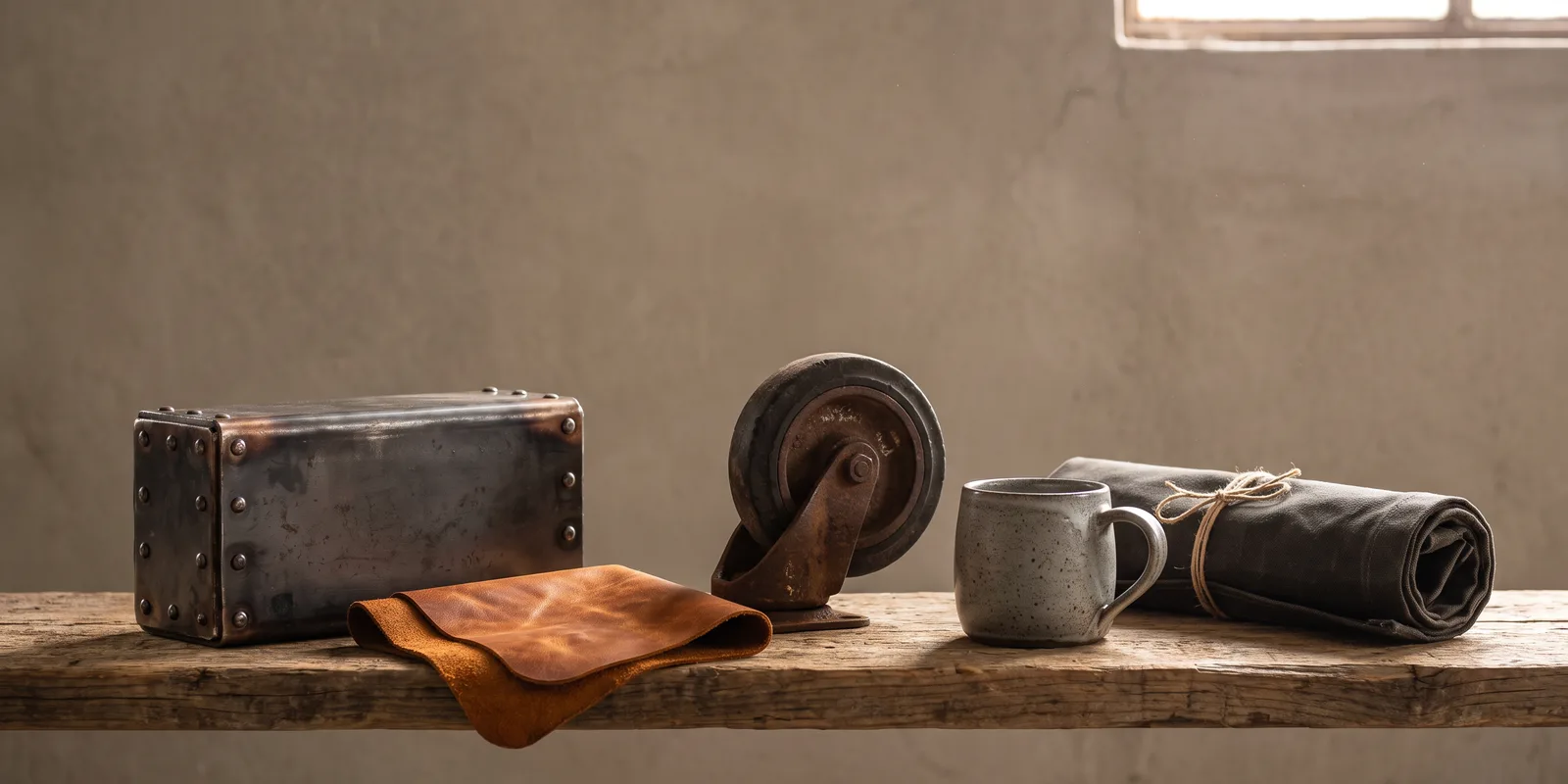
Industrial style evokes workshops and lofts converted from former production buildings. In a new-build home, it is expressed only through the furniture: adding brickwork or exposed pipes the home will not have would be misleading. This page traces its origins and explains which buyers it speaks to.
Origins and history
Industrial furniture was born in the factories, workshops and offices of the early twentieth century: chairs and tables in folded sheet steel, sturdy, stackable and easy to mass-produce.
The taste for these pieces spread to the home with the conversion of former industrial buildings into housing, then with the success of salvaged workshop furniture. The style then broke away from the loft to become a way of furnishing: dark metal, patinated wood and leather.
Materials, colours and furniture
| Feature | What defines it |
|---|---|
| Materials | Blackened steel, cast iron, reclaimed wood, patinated leather, heavy canvas, raw stoneware. |
| Colours | Charcoal, brown, cognac, warm concrete grey. |
| Typical furniture | Low cognac leather sofa, coffee table on cast-iron casters with a wooden top, black steel and wood shelving, club armchair. |
| Accessories | Steel workshop lamps, old books, raw stoneware; never fake brick or exposed pipes. |
The big names of the style
Jean Prouvé. The French constructor designed the “Standard” chair in 1934, whose folded sheet-metal rear legs follow the principle of structures that carry the load where it applies; it is still produced by Vitra.
Xavier Pauchard. A pioneer of galvanisation in France, he registered the Tolix brand in Autun, Burgundy, in 1927 and made sheet-steel chairs there; the A chair, in its lighter 1934 version, became a classic of cafés and kitchens.
Public facts, checked against the sources listed at the end of the page. These designers have no connection with Khorama and do not endorse this software.
Which buyers is it for?
Industrial is a marked style: it attracts a specific audience but can put another off. It suits urban developments looking for a strong character.
Demo unit B204 can be toured in 360° in this style: choose “Industriel” in the tour’s style menu (French interface).
- Young urban professionals: the style evokes the lofts and regenerating neighbourhoods they look for.
- Investors targeting young tenants (studios, city-centre one-bedroom flats, near universities): the furnishing speaks to this audience.
- Conversion projects or raw architecture (concrete, large windows with dark frames): the furniture extends the building.
- Less suited to families and seniors, who picture themselves more easily in a warm interior.