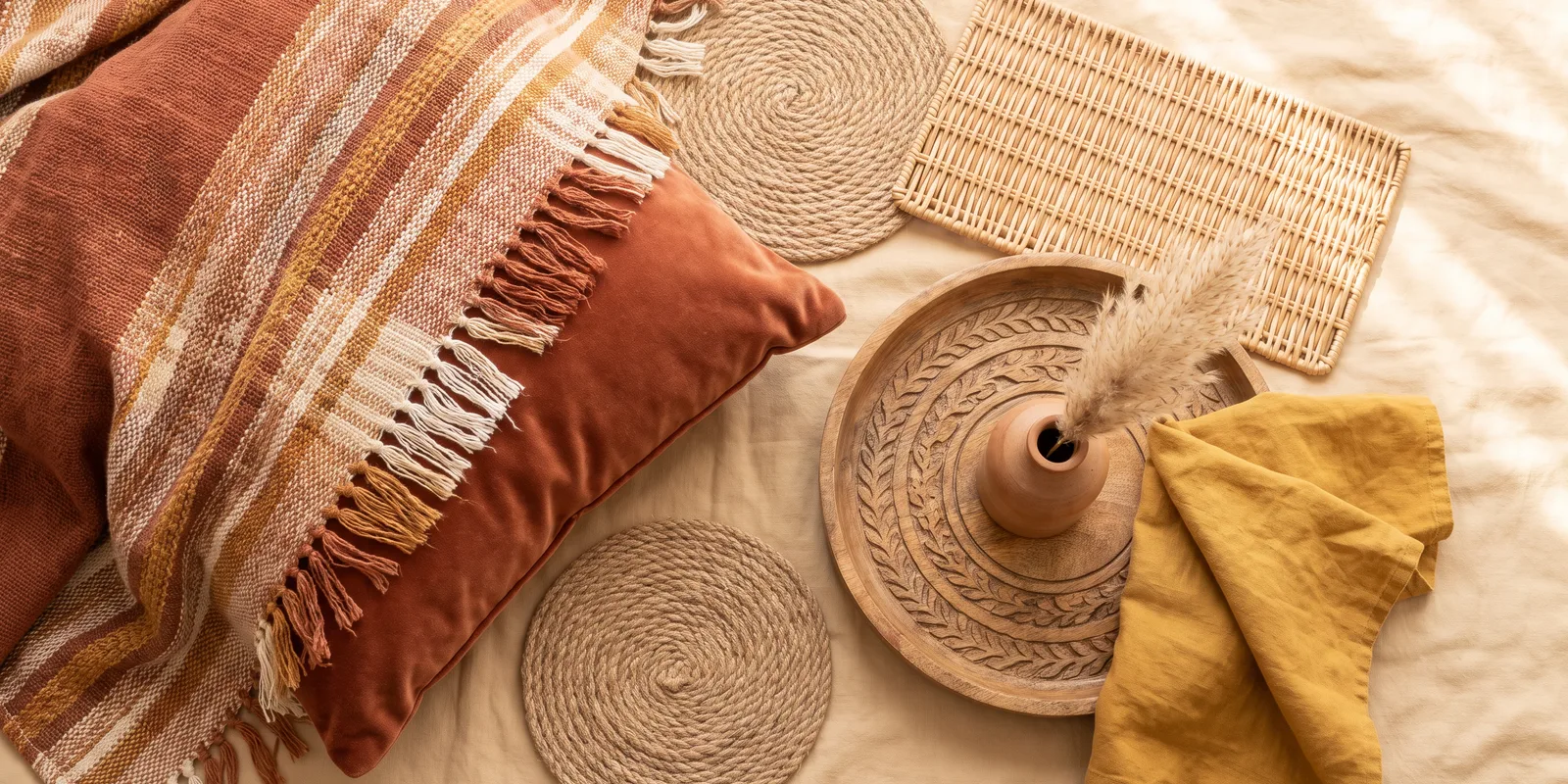
Bohemian style mixes textures, fibres and travel souvenirs to create a lived-in, warm interior. Well balanced, it gives a new-build home character; overloaded, it clutters it. This page traces its origins and explains which buyers it speaks to.
Origins and history
In the nineteenth century, “bohemian” described the free and often poor life of young Parisian artists, by comparison with the travelling “Bohemians”, said to come from Bohemia. Henri Murger made it the subject of his “Scènes de la vie de bohème”, published in book form in 1851, which inspired Puccini’s opera “La Bohème”.
In interiors, the word has described since the twentieth century a free, well-travelled home: woven rugs, natural fibres, found objects, plants. The style enjoyed a new boom in the 2010s with interiors blogs and social media.
Materials, colours and furniture
| Feature | What defines it |
|---|---|
| Materials | Rattan, carved mango wood, soft linen, cotton velvet, jute, fringed weavings. |
| Colours | Sand, rust, cream, olive, touches of mustard. |
| Typical furniture | Low, deep rust velvet sofa, rattan armchair, woven jute poufs, carved wooden coffee table, layered rugs. |
| Accessories | Woven cushions, macramé, plants; few in number and with abstract patterns to avoid clutter. |
The big names of the style
Henri Murger. The French writer published “Scènes de la vie de bohème” in 1851, drawn from his own years as a poor writer; the book’s success fixed the artistic meaning of the word “bohemian”.
Justina Blakeney. The American designer published “The New Bohemians” with Abrams in 2015, a book devoted to some twenty homes in the United States, then founded the home décor brand Jungalow; her books helped popularise contemporary bohemian style.
Public facts, checked against the sources listed at the end of the page. These designers have no connection with Khorama and do not endorse this software.
Which buyers is it for?
Bohemian is a style with strong personality: it wins over a specific audience and can puzzle others. It is useful as a second or third style, alongside a more neutral one.
To see what the buyer receives, take the 360° tour of demo unit B204, produced in four other styles.
- Young creative and independent buyers: the style matches their way of living.
- Small homes with character (top floor, attic, terrace): textures bring warmth without requiring large volumes.
- Furnished-let investors targeting students or young professionals: the furnishing shows a welcoming home.
- To be dosed for families and seniors: overloaded furnishing hides the real floor area.