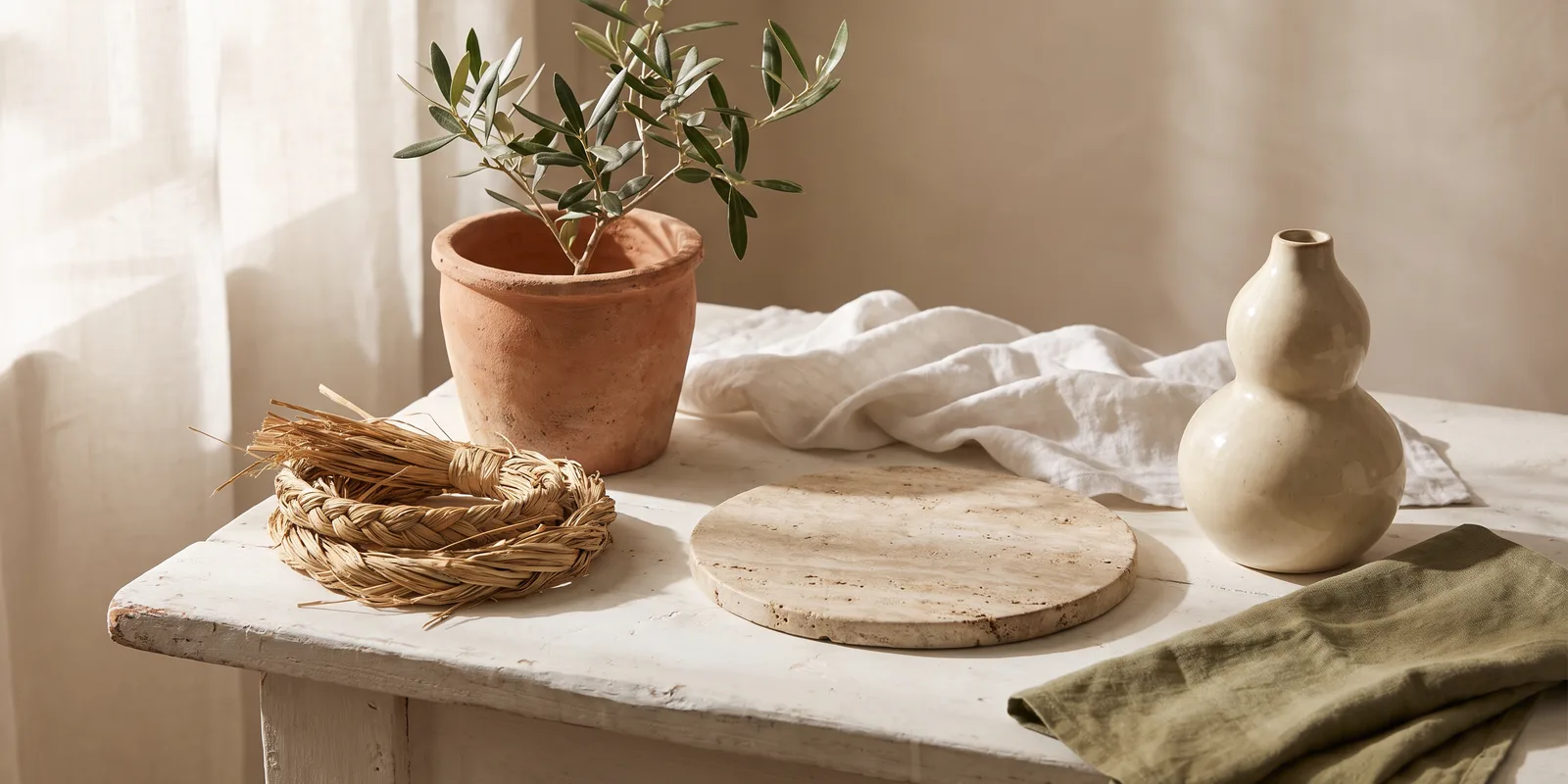
Mediterranean style evokes summer: raw materials, soft light, relaxed rooms. In a tour of a new-build home, it is expressed through furniture and colours only: Khorama adds no arches, no plaster and no tiles, and does not change the home’s real light. This page traces its origins and explains which buyers it speaks to.
Origins and history
Mediterranean style has no birth certificate: it gathers the rural houses and holiday villas of the Mediterranean rim, where people live outdoors as much as indoors. Pale walls, cool floors and simple furniture in wood and plant fibres respond to the heat.
In the twentieth century, modern architects made these houses a source of inspiration, keeping their simplicity, their local materials and their relationship with the sea.
Materials, colours and furniture
| Feature | What defines it |
|---|---|
| Materials | Pale wood, woven straw and rush, washed raw linen, terracotta, travertine, ceramics. |
| Colours | Cream, lime white, soft terracotta, olive. |
| Typical furniture | Deep sofa with a white linen slipcover, round travertine coffee table, rush-seat armchairs, olive tree in a terracotta pot, large jute rug. |
| In the tour | Colours come through textiles and furniture; walls, floors, openings and light remain those of the home. |
The big names of the style
Gio Ponti. The Italian architect and designer created the Parco dei Principi hotel in Sorrento in the early 1960s, whose rooms are dressed in blue-and-white ceramic tiles with graphic patterns he designed.
Le Corbusier. The architect built his Cabanon at Roquebrune-Cap-Martin in 1952, a wooden cabin of about 15 m² facing the Mediterranean, designed according to his system of proportions (the Modulor); since 2016 it has been one of Le Corbusier’s works on the UNESCO World Heritage List.
Public facts, checked against the sources listed at the end of the page. These designers have no connection with Khorama and do not endorse this software.
Which buyers is it for?
Mediterranean is a warm, relaxed style: it evokes holidays and an easy way of life, which makes it a natural argument for southern and coastal developments.
To see what the buyer receives, take the 360° tour of demo unit B204, produced in four other styles.
- Second-home buyers: the style directly shows the intended use, summer living.
- Seniors and young retirees moving south: a bright, simple interior without overload.
- International buyers on Mediterranean coastal markets (French Riviera, Monaco, North Africa): a style everyone understands.
- Holiday-let investors: the furnishing shows a home ready to welcome holidaymakers.