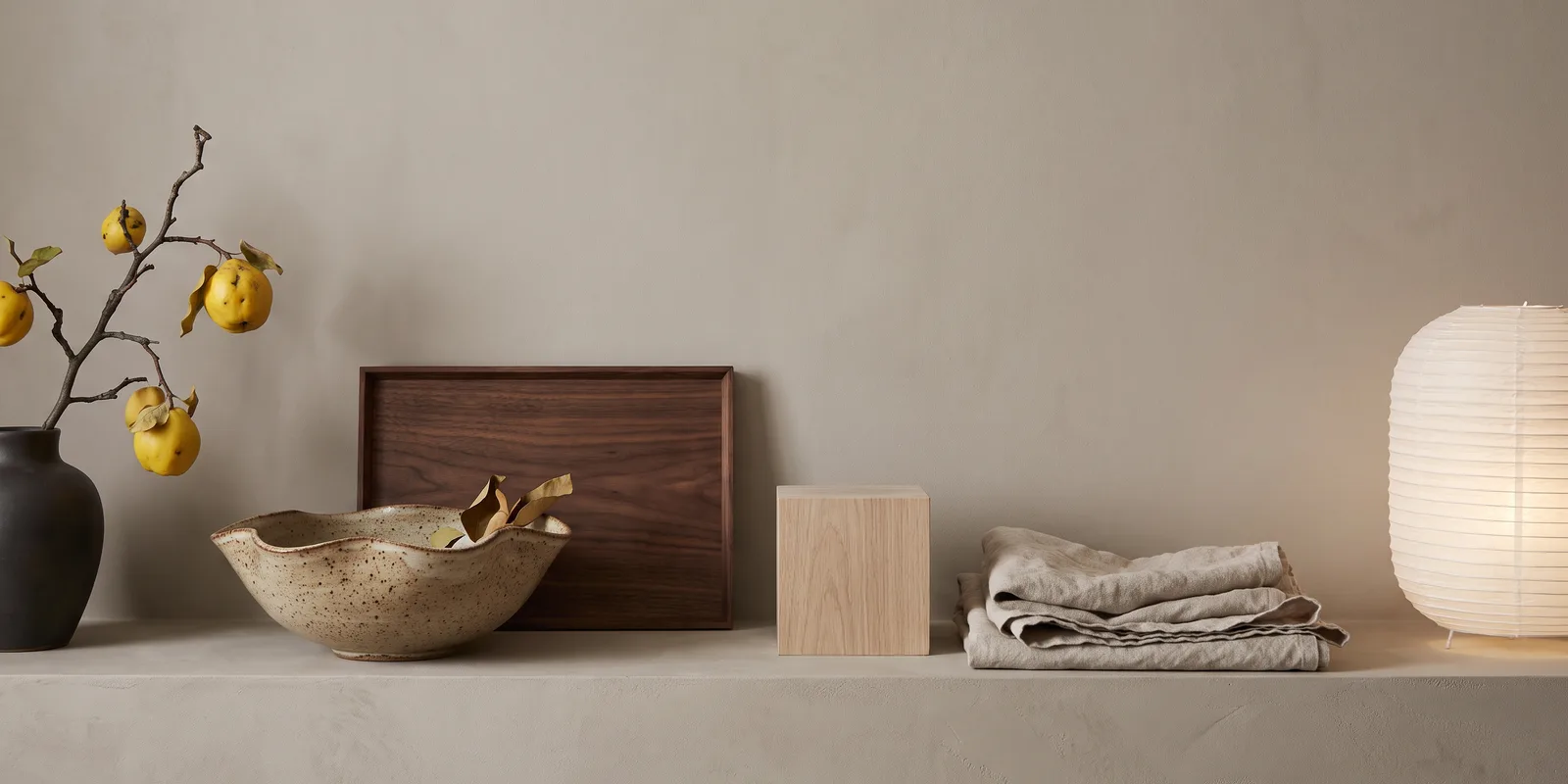
Japandi is the style that has grown the most in interior design in recent years. It combines Japanese restraint with Scandinavian comfort: few objects, natural materials and low furniture that frees the eye. This page traces its origins, describes what sets it apart from Scandinavian style and explains which buyers it speaks to.
Origins and history
According to the Danish Architecture Center, the word “Japandi” appeared in the mid-2010s and spread through the international interiors press from 2017. But Japanese and Scandinavian architects and designers have been watching each other for much longer: the same attention to wood, craftsmanship, light and simple forms.
From Japan, the style borrows a taste for sober, patinated beauty and the room left for emptiness; from Scandinavia, light wood and comfortable textiles. It differs from Scandinavian style through lower furniture, the systematic pairing of a light and a dark wood, and earthier tones (see Japandi or Scandinavian: the differences).
Materials, colours and furniture
| Feature | What defines it |
|---|---|
| Materials | Light oak paired with walnut or smoked oak, creased washed linen, washi paper, hand-thrown stoneware, cast iron. |
| Colours | Mushroom greige, sand, clay, with touches of charcoal. |
| Typical furniture | Long low sofa on a walnut plinth, very low smoked-oak coffee table, low sideboard with slatted fronts, pleated paper lantern. |
| Accessories | One object per surface: a stoneware bowl, a branch in a dark vase; plenty of free floor. |
The big names of the style
Charlotte Perriand. The French designer stayed in Japan from 1940 to 1942, invited as an adviser on export crafts by the Japanese Ministry of Commerce and Industry. There she organised the 1941 exhibition “Selection, Tradition, Creation” and reinterpreted Japanese crafts (bamboo, rice straw) in modern furniture.
Isamu Noguchi. The Japanese-American artist created the Akari lights, in washi paper and bamboo, from 1951 after a visit to Gifu, a town famous for its paper lanterns; they are still made in Gifu by the family company Ozeki.
Norm Architects. The Danish studio founded in Copenhagen in 2008 by Jonas Bjerre-Poulsen and Kasper Rønn works notably with the Japanese manufacturer Karimoku; its interiors in natural tones with low furniture are often cited as Japandi references.
Public facts, checked against the sources listed at the end of the page. These designers have no connection with Khorama and do not endorse this software.
Which buyers is it for?
Japandi is more assertive than Scandinavian but stays calm: it does not overload rooms and highlights volumes. It works particularly well when the home is compact or very bright.
Demo unit B204 can be toured in 360° in this style: choose “Japandi” in the tour’s style menu (French interface).
- Urban professionals: an orderly, soothing interior matches what they look for after the working day, notably in city-centre developments.
- International buyers: the style is known and liked in many countries; it avoids overly local references.
- Small homes: low furniture, few objects and close colours visually enlarge a studio or a one-bedroom flat.
- Downsizing seniors: the style helps them picture themselves in a smaller home without a cramped feeling.