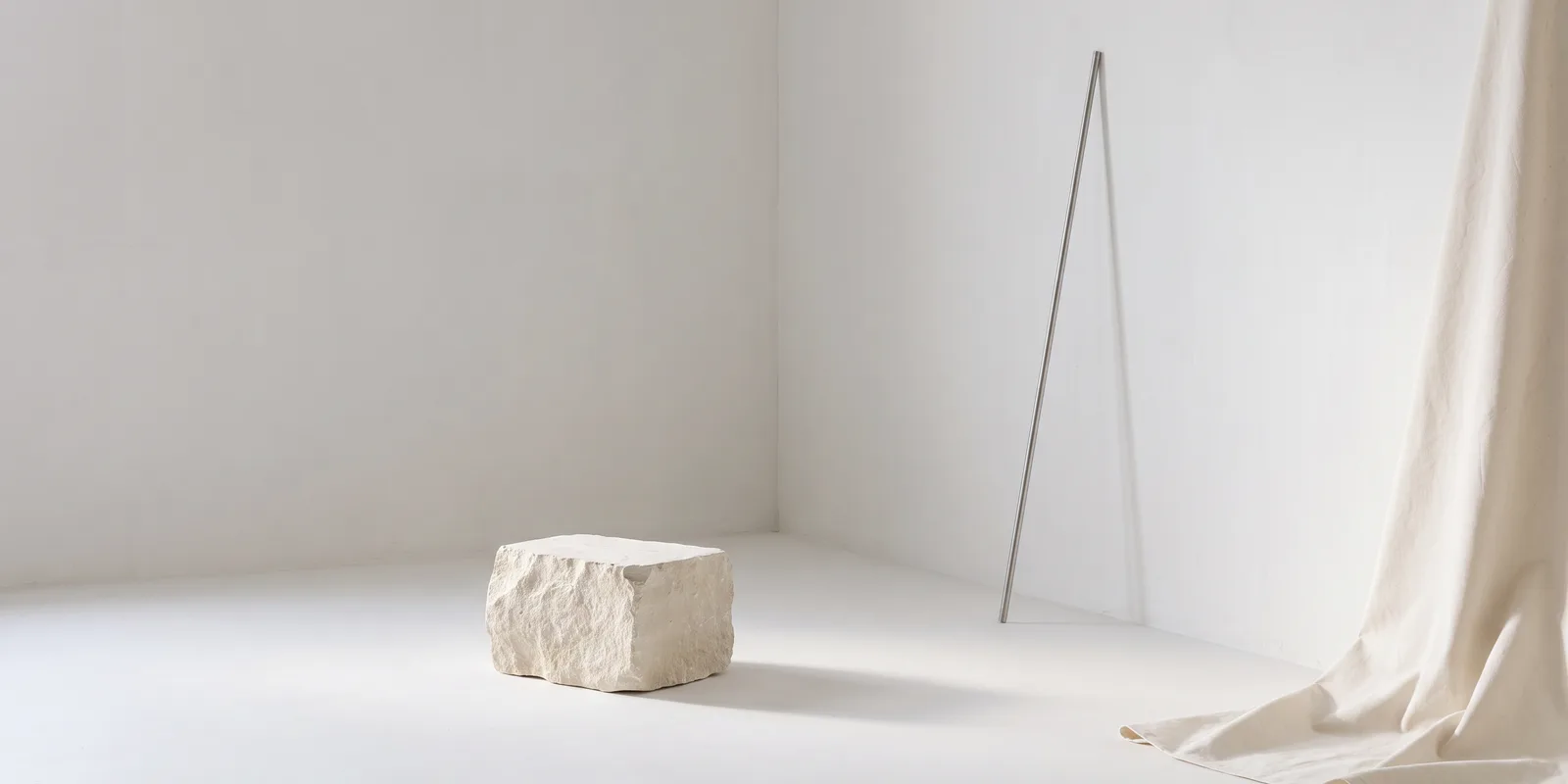
Minimalism is less a style than a discipline: removing everything that is not necessary to let space, light and materials speak. In a tour of a new-build home, it is also the style that shows the volumes most clearly. This page traces its origins and explains which buyers it speaks to.
Origins and history
The word “minimalism” first described, in the 1960s, a movement in American art based on simple, repeated forms. In architecture and interiors, the idea is older: the modern movement of the early twentieth century had already rejected ornament in favour of function.
Domestic minimalism as we know it took shape from the 1990s, around architects who work light, stone and wood with great economy of means.
Materials, colours and furniture
| Feature | What defines it |
|---|---|
| Materials | Pale wood, plain fabric, matt metal, limestone, smooth plaster. |
| Colours | Warm white, chalk white, soft grey, charcoal. |
| Typical furniture | One long low straight-lined sofa, a monolithic stone coffee table, a slim floor lamp, a large plain rug. |
| Accessories | Almost none: one artwork, one object, plenty of free space. |
The big names of the style
John Pawson. The British architect published “Minimum” with Phaidon in 1996, a visual essay on simplicity in architecture, art and design that became a minimalist reference. His interiors are recognisable by their continuous surfaces, controlled light and absence of superfluous objects.
Dieter Rams. The German industrial designer set out ten principles of good design in the late 1970s, summed up as “less, but better”; his 606 shelving system, launched by Vitsœ in 1960, is still made.
Public facts, checked against the sources listed at the end of the page. These designers have no connection with Khorama and do not endorse this software.
Which buyers is it for?
Minimalist is a demanding style: it flatters a fine home, but furnishing that is too bare can feel cold to some visitors. It works best when volumes, light and finishes are the selling point.
To see what the buyer receives, take the 360° tour of demo unit B204, produced in four other styles.
- Homes with fine volumes (high ceilings, dual-aspect living room, large windows): the style hides nothing of what gives the property its value.
- Urban and international buyers: sober and free of local references, it reads the same everywhere.
- Investors: minimal furnishing shows the truly usable floor area, which investors compare from one unit to the next.
- Best avoided for family buyers who want to picture daily life: a warmer style (Scandinavian, neutral) helps them more.